Rznomics Inc.
476830 · KOSDAQ · Healthcare · ₩597.6B (approx. $448.1M)
₩21,300-6.0%vs prev closeclose of 2026-10-30 · not real-time
Valuation summary
Looks expensive
Rznomics Inc. develops RNA based gene therapies for cancers and intractable diseases.· Source: company profile (yfinance/Yahoo Finance)
Valuation summary33/100Downside rigidity10/100Upside potential28/100
⚠ Value-trap warning
This stock is flagged by our value-trap filter (e.g. shrinking earnings, negative free cash flow, or losses). Cheap can stay cheap — read why before acting.
Which value-trap type
- Catastrophic, unrecovered drawdown — max drawdown -83% (worse than −65% with a still-negative 1-year return).
Score summary
Some axes lack data (–)
A summary of valuation factors — not a buy recommendation. You decide.
Data as of: 2026-10-30 · end-of-day, not real-timeData as of — price/valuation/technicals: the close date above · NPS stake: US=quarterly SEC 13F, Korea=annual · short interest: exchange's latest settlement · fundamentals: latest filing
Peers
| Company | PER | PBR | ROE | Div | Score |
|---|---|---|---|---|---|
| 알지노믹스 | – | 12.7 | – | 0.0% | 33 |
| 프로티나 | – | 25.8 | – | 0.0% | 33 |
| 동아제약 | 6.8 | 0.5 | 7% | 2.0% | 59 |
| 파미셀 | 12.0 | 3.9 | -29% | 0.5% | 30 |
| 온코닉테라퓨틱스 | 22.1 | 6.3 | 34% | 0.0% | 46 |
| JW중외제약 | 5.6 | 1.3 | 28% | 2.8% | 68 |
Same sector, nearest by market cap · – = no data (value traps excluded)
Price chart
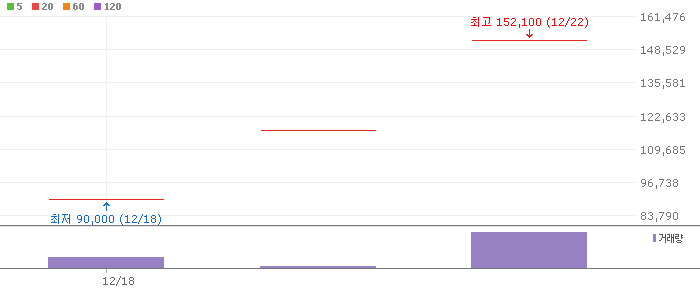
View on Naver Finance →· Chart: Naver Finance
The chart (long-term trend, Ichimoku cloud) is for observation only — not a buy or sell signal.
Structure analysis · observation only
Shows only where the current price sits within the channel structure (based on past swings).
Position: 0.0~0.5 zone · Downtrend channelStructure as of 2026-10-30
Channel levels (price by multiple)
- Baseline (0)₩22,156
- Current price₩21,300
Unfilled gaps
- Gap downabove price₩27,550–₩28,050 · Gap width 1.8% · 2026-10-08
The channel, levels and gaps are observational geometry showing where the current price sits within past swing structure. They are not a rebound/bottom probability, a price target, or a buy/sell signal — plain chart patterns carry no reliable predictive edge (our backtest conclusion).
A highlight of the key metrics detailed below.
Why it looks cheap
- –
Why it might be risky
- P/B (Price/Book)12.7
Strategy ranks
Top-tier in 0 of 1 evaluated strategies
Ranks within the Korea market — tap to open that ranking (ranks are per market).
Valuation
- P/E (Price/Earnings)
- –
- Forward P/E
- –
- P/B (Price/Book)
- 12.7
- PEG
- –
- P/S (Price/Sales)
- –
- Dividend Yield
- 0.0%
- FCF Yield
- –
- EV/EBITDA
- –
- EV/Sales
- –
- Net Debt / EBITDA
- –
- P/CF (Price/Cash Flow)
- –
Quality & growth
- ROE (Return on Equity)
- –
- ROA (Return on Assets)
- –
- Rule of 40
- –
- Earnings Growth
- –
Past returns
1M
-11.4%
3M
+0.7%
6M
-77.0%
1Y
–
3Y
–
5Y
–
Past returns — they do not guarantee future results.
More indicators
Sortino
-0.72
Downside vol
76.43%
Max drawdown (3y)
-82.58%
Deep historical drawdown
Volatility (annual.)
117.91%
Large price swings
RSI(14) daily
39.30
RSI(14) weekly
45.80
vs 200d MA
-62.90%
Below 200-day avg
Trend slope (annualized)
-85.56%
Recent downtrend
Golden cross
✕ not aligned
Color: green = healthy, red = caution (absolute thresholds, value/quality metrics only). Downside vol & Sortino are annualized. Max drawdown = largest drop from a 3-year peak; volatility = 1-year annualized. Price/Graham < 1 = below Graham fair value (profitable, positive-equity names only). RSI < 30 = oversold. For reference only.
Long-term trend (Ichimoku)
A Japanese trend tool. Price above the 'cloud' is supportive; below is weak. A strong uptrend doesn't mean it's cheap — stocks that have run up are usually more expensive.
D
Below the cloud (weak)
W
Inside the cloud (neutral)
M
Inside the cloud (neutral)